

Starting an online store doesn’t require coding expertise or a big budget anymore. The challenge lies in picking the right platform from countless available options. Your ideal ecommerce builder should make your site look professional, help customers shop easily, and handle payments securely. It needs to grow alongside your business while keeping checkout smooth and hassle-free. A smart platform choice directly impacts your sales and keeps buyers returning. We’ve tested and compared the top ecommerce website builders based on pricing, features, security, and real user feedback to help you find your perfect match without the guesswork.
Table of Contents
10 best ecommerce website builders
1. Shopify

Founded over 19 years ago, Shopify has become one of the world’s leading ecommerce platforms, powering millions of online stores across approximately 150 countries. The platform is designed to help businesses of all sizes build professional online stores without requiring coding skills or large budgets. Each store includes essential features like SSL certificates, domain hosting, professionally designed themes, and powerful selling tools right out of the box.
What makes Shopify stand out is its user-friendly interface and comprehensive feature set. The intuitive drag-and-drop editor makes store customization simple, while Shopify’s checkout converts 15% better on average than competing platforms. The platform also offers AI tools called “Shopify Magic” and an assistant named “Sidekick” to help with tasks like writing product descriptions, creating email campaigns, and analyzing sales data.
As of mid-2025, Shopify’s Theme Store offers 268 themes total—23 free themes and 245 paid options starting around $150. Beyond the official store, thousands of additional themes are available through third-party marketplaces. The app ecosystem provides access to thousands of integrations for extending functionality, from marketing and SEO to inventory management and customer service. The setup process is straightforward, with guided wizards helping you add products, customize your store, connect your domain, and configure payments within minutes.
G2 ⭐ Rating
4.4/5
Who It’s For
Shopify suits businesses of all sizes, from solo entrepreneurs to large enterprises. It’s ideal for merchants wanting to sell across multiple channels—online stores, physical retail, social media, and marketplaces. The platform works well for product-based businesses and service providers across industries like fashion, electronics, food and beverage, and handmade goods.
Key Features
- AI-Powered Tools: Shopify Magic for content creation and Sidekick for business consulting and analytics
- Payment Processing: Shopify Payments plus integration with 100+ third-party payment providers
- App Ecosystem: Thousands of apps and integrations available through the Shopify App Store
- High-Converting Checkout: Express checkout, Shop Pay, discount codes, and in-store pickup options
- POS Integration: Shopify POS connects online and physical store sales channels
- Shipping & Fulfillment: Built-in tools for labels, tracking, taxes, returns, and inventory management
- Cart Recovery: Automated abandoned cart recovery through email reminders
- Analytics & Reporting: Detailed sales tracking, customer behavior insights, and performance metrics
- Omnichannel Selling: Unified inventory and sales management across all channels
- 24/7 Support: Round-the-clock assistance via email, live chat, and phone
Pricing
- Starter: $5/month (social selling only)
- Basic: $39/month + 2.9% + 30¢ per transaction
- Grow: $105/month + 2.6% + 30¢ per transaction
- Advanced: $399/month + 2.4% + 30¢ per transaction
- Shopify Plus: Starting at $2,300/month (enterprise solution)
Note: 3-day free trial available (no credit card required), first month for $1. Annual plans receive 20-25% discounts.
2. Woocommerce
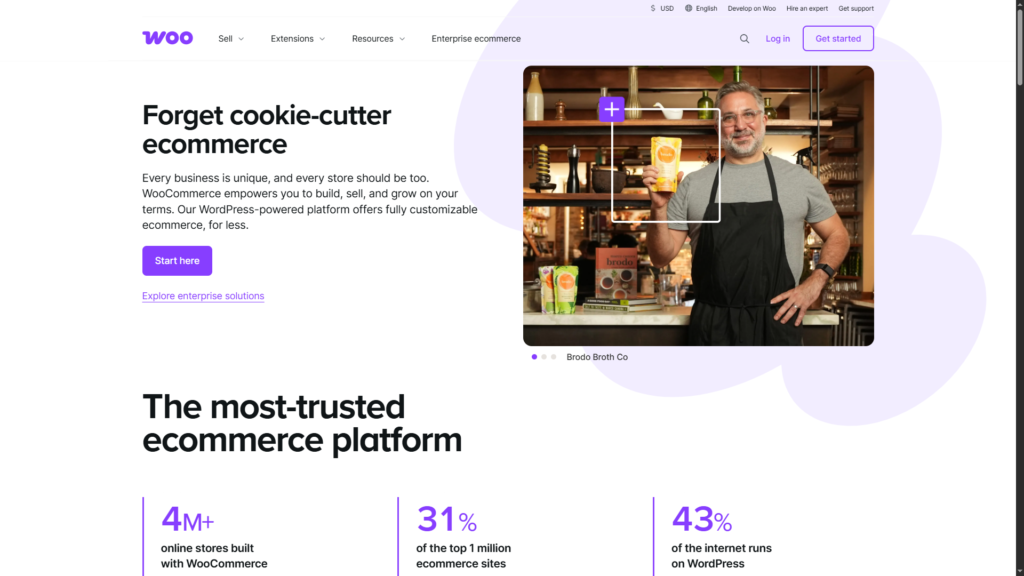
WooCommerce is a free plugin that transforms WordPress websites into complete online stores. Built specifically for WordPress users, it gives you full control over your ecommerce site without the need to start from scratch. The plugin is open-source, meaning you can customize every element of your store to match your business needs. While the plugin itself is free to download and install, you’ll need to invest in essential services like hosting, a domain name, and an SSL certificate to accept payments. This makes WooCommerce ideal for business owners who want total autonomy over their website but don’t mind handling technical maintenance and updates themselves. The platform supports unlimited products and inventory, and you can expand its capabilities with hundreds of free and paid extensions for features like wishlists, product comparisons, and marketing automation.
G2 Rating
⭐ 4.4/5
Who It’s For
WooCommerce is perfect for business owners who are already familiar with WordPress and want complete control over their online store’s design and functionality.
Key Features
- Built specifically for WordPress with seamless integration
- Unlimited product listings with images and galleries
- Hundreds of free and paid extensions available
- Mobile-friendly design for all devices
- Complete control over customer and business data
- Highly customizable with themes and templates
- Integration options with tools like HubSpot for marketing automation
Pricing
- Free to install and use (no licensing fees)
- Must pay for WordPress hosting (approximately $100-$1,000+ per year)
- Domain name registration (approximately $10-$20 per year)
- SSL certificate (often free with hosting)
- Optional paid extensions ($43-$200+ per year per extension)
- WordPress commerce hosting plan available at $45 per month (billed annually) for those seeking a managed solution
3. Bigcommerce
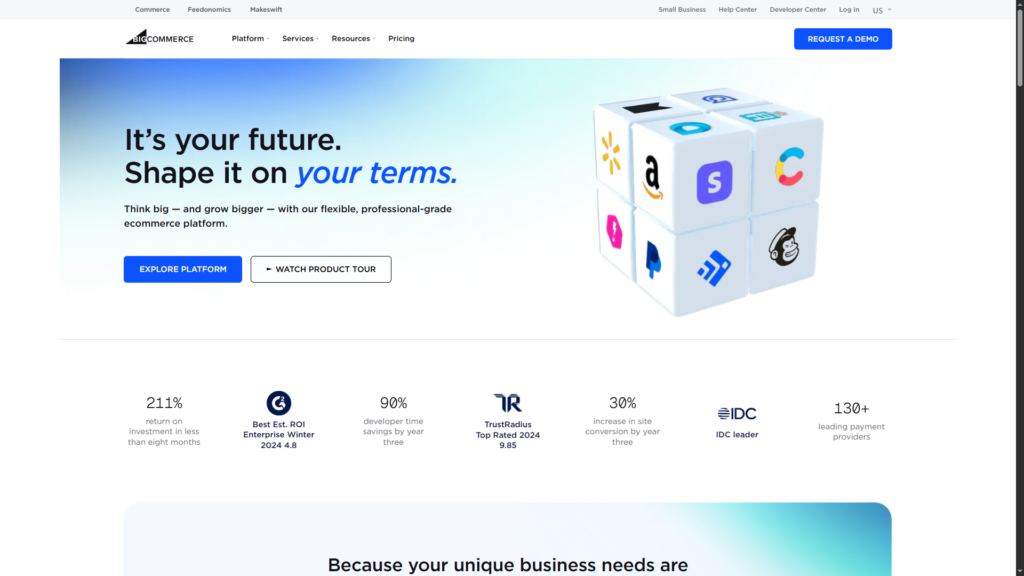
BigCommerce is a powerful platform designed for businesses ready to scale their online operations. Known for its extensive built-in features, this platform eliminates the need for many third-party apps that other platforms require. It serves businesses of all sizes, from growing startups to multinational companies like Ted Baker and Black Diamond.
The platform excels at multichannel selling, allowing you to list products across marketplaces like Amazon, eBay, and Facebook while automatically syncing inventory changes. With unlimited products and staff accounts across all plans, plus no transaction fees, BigCommerce helps you keep more of your revenue. The platform supports international expansion through multicurrency and multilingual capabilities, making global sales straightforward.
However, BigCommerce has some limitations. The setup process is less intuitive than competitors, and when your sales exceed certain thresholds, you’ll be automatically upgraded to a higher-priced plan BigCommerce. Website customization, particularly content placement, can also be restrictive compared to other builders.
G2 Rating
⭐ 4.2/5
Who It’s For
BigCommerce targets established businesses and enterprises already generating significant revenue. The platform is ideal for companies selling over $50,000 annually and those looking for advanced ecommerce functionality without extensive app dependencies. It’s particularly suited for businesses planning immediate, large-scale launches rather than casual sellers.
Key Features
- Visual editor for drag-and-drop customization BigCommerce
- Theme customization using HTML, CSS, and JavaScript for technical users
- Checkout customization through API and SDK
- Digital wallet support including Amazon Pay, Apple Pay, and Google Pay
- Over 65 payment providers serving more than 100 countries and over 250 local payment methods BigCommerce
- Multichannel integration with automatic product syncing
- 12 free themes and over 200 paid templates
- 24/7 phone and live chat support on all plans
- Built-in SEO tools and professional reporting features
- Real-time shipping quotes available across all plans
Pricing
- Standard Plan: $39/month (or $29/month billed annually) — Sales cap of $50,000/year
- Plus Plan: $105/month (or $79/month billed annually) — Sales cap of $180,000/year
- Pro Plan: $399/month (or $299/month billed annually) — Sales cap of $400,000/year
- Enterprise Plan: Custom pricing based on business needs
- All plans include a 15-day free trial Wise
- Card processing rates start at 2.89% plus $0.29 per transaction
4. Wix
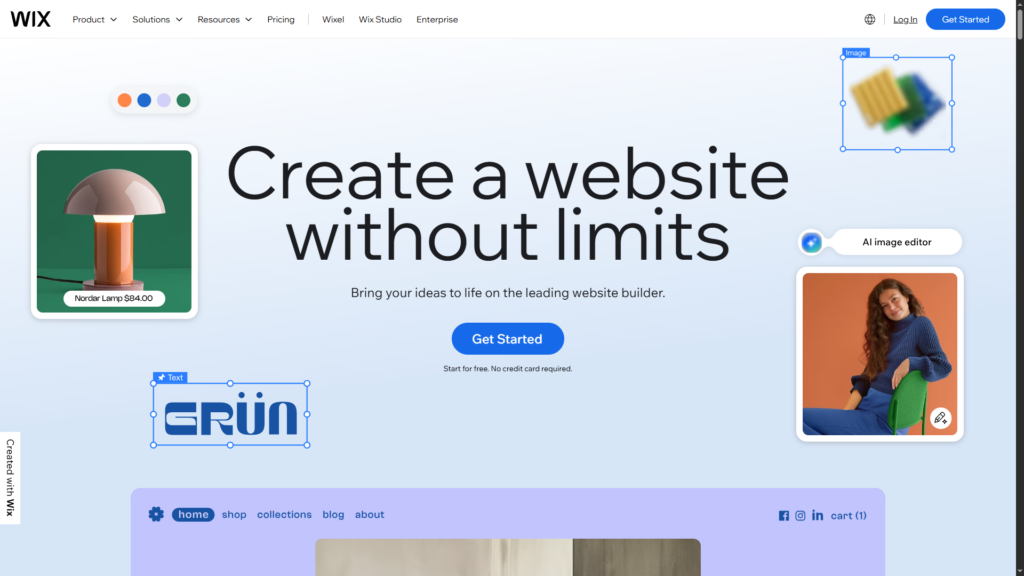
Wix stands out as one of the most versatile website builders available today, making it an excellent choice for businesses that want more than just an online store. Unlike platforms focused solely on ecommerce, Wix allows you to build a complete website where your store is one component alongside blogs, booking systems, events, and services. This makes it perfect for businesses planning to expand beyond simple product sales.
The platform offers over 500 professionally designed templates that you can customize using an intuitive drag-and-drop interface—no coding knowledge required. However, those with coding experience can use Wix’s open platform for advanced customization. One important consideration: you cannot switch templates after your site goes live, so choose carefully from the start.
Wix has embraced AI technology throughout its platform. An AI chatbot guides you through setup, automatically suggesting relevant pages and apps for your store. The platform includes AI-powered tools for creating product descriptions, generating SEO meta tags, and even building custom AI agents that work around the clock to re-engage customers, monitor inventory, and optimize discount strategies.
Even on lower-tier plans, Wix provides robust ecommerce features including order tracking, automated sales tax, and abandoned cart recovery. You can sell across multiple channels—social media platforms like Instagram and Facebook, third-party marketplaces, mobile apps, and even physical locations through their integrated point-of-sale system. The Wix App Market offers hundreds of integrations with services like QuickBooks and Shippo through simple one-click installations.
G2 Rating
⭐ 4.2/5
Who It’s For
Wix is ideal for non-technical users who want to create a full-featured website where ecommerce is part of the offering rather than the entire focus. It suits businesses across various industries including photography, video, music, events, restaurants, and service-based businesses.
Key Features
- Over 500 customizable templates for various industries
- Drag-and-drop website builder with no coding required
- AI-powered tools for product descriptions, SEO optimization, and business automation
- Multi-channel selling (Instagram, Facebook, TikTok, eBay, mobile apps, POS systems)
- Built-in SEO Assistant with automatic optimization recommendations
- Wix Payments for seamless checkout experience
- Free SSL certificate for secure transactions
- Abandoned cart recovery and automated sales tax
- Dedicated blogging platform with multi-user collaboration
- Open app marketplace with hundreds of third-party integrations
- Product detail import via CSV files
- AI Custom Agent for customer re-engagement and inventory management
Pricing
- Ecommerce plans start at $27-$29 per month
- Plans range up to $159 per month for advanced features
- Free plan available (displays ads and uses wixsite.com subdomain)
- Premium and Studio plans include 14-day money-back guarantee
5. Squarespace

Squarespace stands out as a versatile ecommerce platform that combines beautiful design with practical functionality. The platform’s Fluid Engine gives you flexibility to resize and reposition content blocks easily, while its drag-and-drop builder requires no coding knowledge. You can choose from numerous modern templates and customize them with hundreds of fonts, colors, and images to match your brand perfectly.
What sets Squarespace apart is its dual capability—it handles both product sales and service bookings seamlessly. The platform includes robust ecommerce tools like inventory management, shipping calculators, and supports multiple payment methods including Stripe, PayPal, Apple Pay, and Afterpay. You can sell physical products, digital content, subscriptions, classes, and even create membership areas with exclusive content. Built-in blogging features enhance SEO visibility, while merchandising tools like low stock alerts and product waitlists help you manage operations efficiently.
G2 Rating
⭐ 4.4/5
Who It’s For
Squarespace is ideal for creative professionals and businesses seeking visually stunning websites without technical complexity. It’s particularly well-suited for photographers, restaurants, local stores, and anyone looking to monetize their website through products or services.
Key Features
- Fluid Engine for flexible content positioning
- Unlimited product listings with advanced inventory management
- Member Areas for subscription-only content
- Appointment booking and class selling capabilities
- Automated post-purchase email sequences
- Marketing extensions (Mailchimp, Printful)
- SSL encryption and strong security features
- Mobile app for on-the-go management
- Professional services team available for hire
Pricing
- Business Plan: $33/month with basic ecommerce features
- Commerce Basic: $36/month with advanced merchandising tools
- Commerce Advanced: $16/month (billed annually) with 2.9% + 30¢ transaction fees and 2% online store fee
- Top Tier: $99/month (billed annually) with 2.5% + 30¢ fees and 0% transaction fees
- Note: No free plan available; free trial offered
6. Square Online
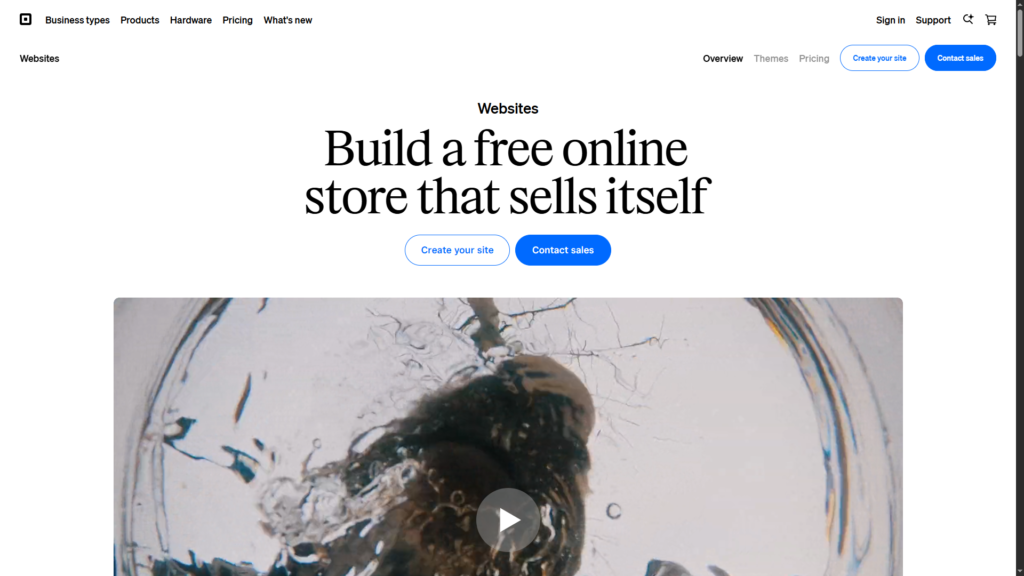
Square Online, powered by Weebly since its 2018 acquisition, is a freemium ecommerce platform that excels at bridging the gap between physical and digital retail. What makes Square truly special is its unified dashboard that seamlessly syncs your online store with offline sales—whether you’re selling at a farmers market, craft fair, or brick-and-mortar location. When you sell your last item in person, it automatically updates online inventory, preventing overselling and eliminating manual tracking through spreadsheets.
The platform offers a beginner-friendly drag-and-drop editor with excellent onboarding that guides you through setup based on your specific business needs. You can add unlimited products with automatic categorization, utilize various fulfillment options, and benefit from an automatic tax calculator. Square also provides unlimited bandwidth across all plans, ensuring your site handles high traffic smoothly. The free plan includes minimal advertising—just a small footer ad—unlike competitors with intrusive banners.
However, customization is somewhat limited. Free users must work within the site builder’s constraints, while paid subscribers access 22 customizable themes. For those needing more design flexibility, professional designer services are available for $499. Square also enables social selling through Facebook, Instagram, and Pinterest integrations, expanding your reach beyond your website.
G2 Rating
⭐ 4.2/5 (some sources report 4.3/5)
Who It’s For
Square Online is ideal for small businesses and retailers who sell both in-person and online. It’s particularly suited for offline businesses expanding to ecommerce rather than digital-first sellers, making it perfect for local shops, market vendors, and service providers.
Key Features
- Unified dashboard syncing online and offline sales in real-time
- Bulk inventory management with automatic product categorization
- Integration with Square POS and free credit card reader
- Unlimited products and unlimited bandwidth on all plans
- Automatic tax calculator for simplified selling
- Mobile-responsive design across all devices
- Social media integration for selling on Facebook, Instagram, and Pinterest
- Minimal advertising on free plan (small footer ad only)
- Comprehensive onboarding with business-specific configuration
- Various fulfillment options for flexible order management
Pricing
- Free Plan: $0/month with 3.3% + 30¢ per online transaction
- Plus Plan: $49/month with 2.9% + 30¢ per transaction
- Premium Plan: $149/month with 2.9% + 30¢ per transaction
- In-Person Transactions: 2.6% + 10¢ with Square card reader (reader available free)
- Professional Design Service: $499 one-time fee for custom site configuration
7. Godaddy
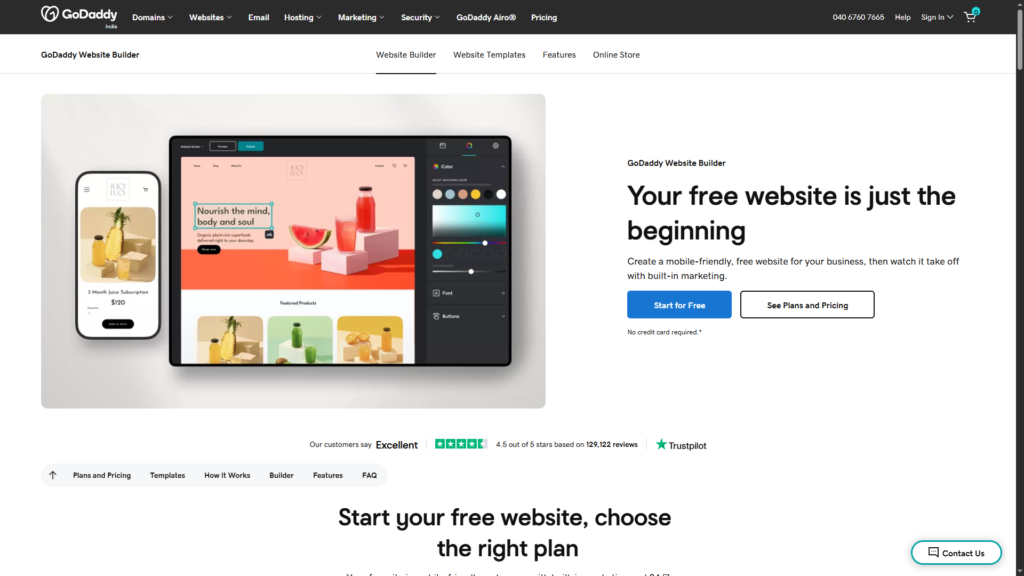
GoDaddy is well-known as a domain registrar and web hosting provider, but it also offers a straightforward website builder designed for ecommerce. The platform is especially suitable for beginners and small business owners who want a simple, all-in-one solution to launch their online store quickly. GoDaddy uses Artificial Design Intelligence (ADI) technology to help you create a customized website in just minutes by answering a few questions about your business. While it provides essential ecommerce functionality, the platform has limitations in design flexibility and advanced features compared to specialized ecommerce builders.
G2 Rating
⭐ 3.9 out of 5
Who It’s For
GoDaddy is ideal for beginners and small business owners who prioritize speed and simplicity over advanced customization. It works best for entrepreneurs looking to integrate ecommerce into a broader online presence, especially those who want to manage their domain, hosting, and website all in one place.
Key Features
- Over 100 mobile-friendly templates to quickly launch your store
- AI-powered website builder that creates customized designs in minutes
- Integration with major social media platforms like Instagram and Facebook
- Multi-channel selling capabilities through Amazon, Walmart, and eBay
- Multiple payment options including PayPal, Apple Pay, Google Pay, and Venmo
- Built-in SEO tools and email marketing features
- Point-of-sale integration to connect online and offline sales
- Automated inventory management across all sales channels
- Professional web design consultation services available
- 24/7 customer support
Pricing
- Free Plan: Limited features with GoDaddy branding (yoursite.godaddysites.com)
- Basic Plan: $12.99/month (custom domain, SEO tools, SSL security)
- Premium Plan: $22.99/month (adds online appointments and booking features)
- Commerce Plan: $26.99/month for full ecommerce functionality
- Transaction Fees: 2.7% + $0.30 per online transaction
- 7-day free trial available for all paid plans
- Annual billing offers better discounts than monthly payments
8. Hostinger
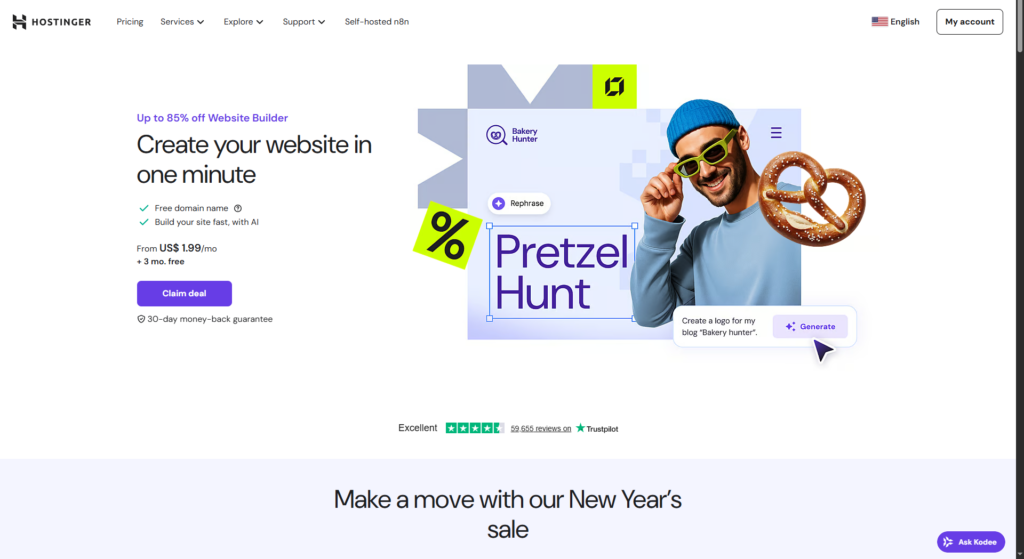
Hostinger provides a straightforward solution for small business owners looking to build their ecommerce store without technical expertise. The platform combines an intuitive drag-and-drop editor with powerful AI technology that helps create everything from website layouts to product descriptions. Unlike many competitors, Hostinger handles essential tasks like shipping calculations, tax management, and delivery logistics automatically, removing the need for professional developers. The platform supports up to 1,000 products and offers integration with over 100 payment methods with zero transaction fees, making it particularly attractive for budget-conscious sellers. Additionally, Hostinger includes marketing tools like Google Analytics and Facebook Ads integration to help grow your online presence effectively.
G2 Rating
⭐ 4.4/5
Who It’s For
Hostinger works best for small business owners and casual sellers who want an affordable, lightweight ecommerce platform that doesn’t compromise on essential functionality. It’s ideal for entrepreneurs managing smaller inventories who need quick setup and automated tools.
Key Features
- Drag-and-drop website builder with 170+ professionally designed templates
- AI-powered content generation for product descriptions, blog posts, and SEO-optimized copy
- AI logo maker and image generator for custom branded visuals
- CRM tools for managing customer emails, discount codes, and promotional campaigns
- Automatic shipping, delivery, and tax calculation tools
- Integration with Printful for print-on-demand products
- Marketing integrations including Google Analytics, Meta Pixel, and Google Ads
- Free domain for one year, SSL certificate, and business email included
- 24/7 live chat customer support with responses typically under 3 minutes
Pricing
- Business Website Builder Plan: $3.99/month (48-month term, billed upfront at $143.52)
- Renewal rate: $16.99/month after initial term
- Product limit: 1,000 items
- Transaction fees: 0%
- Free trial: 7 days
- All plans include hosting, domain, SSL, and email services
9. Volusion
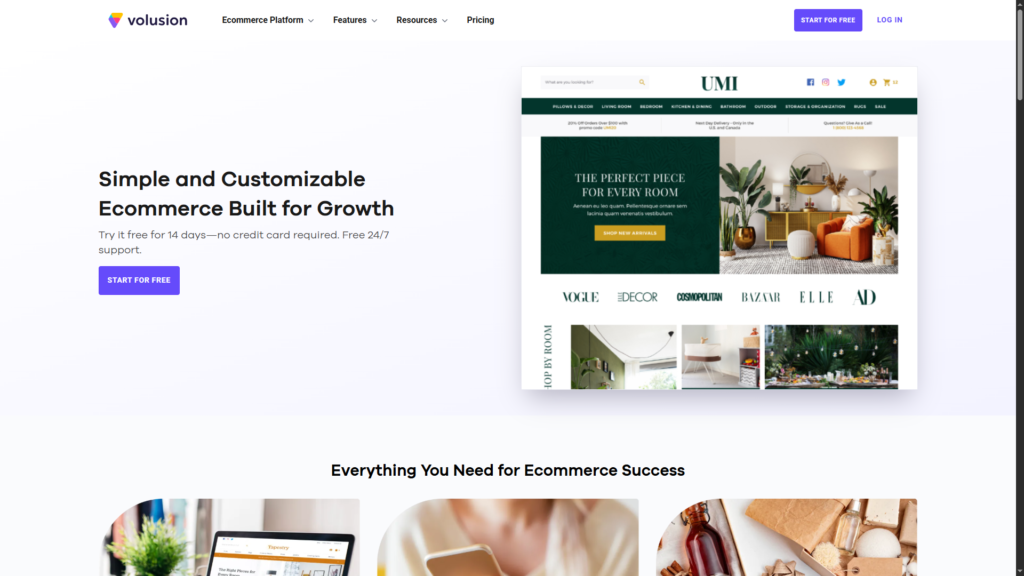
Volusion is an all-in-one ecommerce solution designed to help small and medium-sized businesses build and manage their online stores. The platform offers a straightforward approach to creating websites with drag-and-drop content blocks and responsive themes that work well on mobile devices. You can customize page layouts without any coding knowledge, making it accessible for beginners. Volusion includes helpful features like suggested product recommendations shown through videos, multiple payment gateway options, and inventory management tools. However, the platform comes with some limitations, including product listing caps based on your plan, sales volume restrictions, and the lack of automated delivery for digital products. While some users appreciate the simplicity, most experienced sellers eventually move to platforms with better scalability and support.
G2 Rating
⭐3.4/5
Who It’s For
Volusion works best for small to medium-sized online businesses that primarily sell physical products. The platform is not ideal for selling digital products like ebooks or downloadable files.
Key Features
- Simple page builder with click-to-add functionality for pre-coded content blocks
- Free responsive themes designed to maximize conversions
- CSS editor for advanced customization without backend coding
- Product video options to showcase items more effectively
- Subscription billing support for recurring payments
- Customer relationship management (CRM) system (available from second-tier plan)
- Abandoned cart reports and customer reviews (available from second-tier plan)
- Live chat and email support included with all plans
- Mobile app for managing your store on the go
Pricing
- Plans start at $35 per month
- Pricing ranges up to $299 per month for higher tiers
- Custom enterprise pricing available based on gross merchandise volume (GMV)
- 14-day free trial available
- All plans include payment processing support with no additional transaction fees
10. Shift4shop
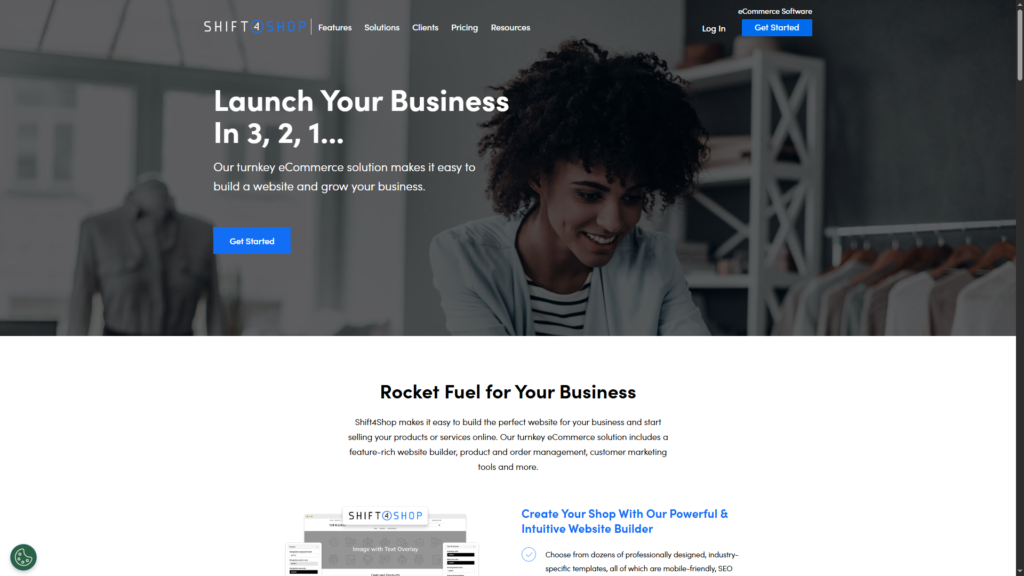
Shift4Shop, previously called 3dcart, stands out as an affordable ecommerce platform that provides a complete set of tools for building and managing online stores. The platform offers an attractive free option for U.S.-based businesses, making it especially appealing for small retailers and startups with limited budgets. While it includes powerful features like built-in SEO tools, unlimited product listings, and no transaction fees when using its payment processor, the platform does have a learning curve and requires merchants to use Shift4Shop’s payment processing solution to access the free plan. The platform provides over 100 free mobile-responsive themes and includes features typically found in more expensive solutions.
G2 Rating
⭐ 3.9/5
Who It’s For
Shift4Shop is designed for budget-conscious retailers and small to medium-sized businesses looking to establish an online presence without significant upfront costs. It’s ideal for store owners who want comprehensive ecommerce features and are willing to use the platform’s integrated payment processing system.
Key Features
- Over 100 free mobile-responsive website templates
- Built-in SEO tools with automatic sitemap generation and URL optimization
- Abandoned cart recovery notifications to capture lost sales
- Unlimited products, bandwidth, and storage
- No transaction fees when using Shift4 Payments
- Free domain registration for the first year
- Free website migration service
- Product and order management tools
- Customer marketing and CRM capabilities
- Real-time shipping rate integration with major carriers
Pricing
- Free for U.S. businesses processing at least $500 monthly through Shift4 Payments (standard payment processing fees of 2.9% + $0.30 per transaction apply)
- Paid plans start at $39 per month for businesses using alternative payment gateways like PayPal
- All plans include access to the full suite of enterprise-level features
How to choose the best ecommerce website builder
Understand Your Business Needs
Start by asking yourself what kind of business you’re running. Are you launching a small side project or building a full-scale enterprise? The size of your operation matters because it determines which platform features you’ll actually need. Also consider what you’re selling—digital products, physical goods, or online courses each have unique requirements. Make sure the platform you choose can handle your specific product types and business model.
Set a Realistic Budget
Your budget should account for more than just the monthly subscription fee. Free builders like Wix or WordPress.com are great for tight budgets, while premium options like Squarespace or Shopify offer more robust features at higher prices. Don’t forget about additional costs like domain names, hosting, apps, and premium templates. Some platforms also increase prices dramatically when you upgrade plans, so think about both your current expenses and long-term affordability as your business grows.
Assess Your Technical Skills
Be honest about your comfort level with technology. If building websites feels intimidating, choose a platform with drag-and-drop editors that simplify the design process. You’ll still need basic skills to create product pages and add items to your store, but the learning curve should feel manageable. Check whether the dashboard is intuitive—a complicated backend can make daily store management frustrating and time-consuming.
Consider Multichannel Selling Options
Think beyond just your website. Where else do you want customers to find your products? Many successful stores sell across social media platforms and even sync online sales with physical locations. Multichannel selling significantly increases your visibility and reach. Choose a platform that makes it easy to manage inventory and sales across multiple channels from one central dashboard.
Prioritize Customer Experience Features
The shopping experience you create directly impacts your sales. Look for platforms offering multiple payment gateways—for instance, Shop Pay’s express checkout can speed up the process by four times, helping customers complete purchases faster. Essential features should include email marketing tools, mobile optimization, SEO capabilities, analytics, security measures, and social media integration. Also verify that customer support is readily available through phone, email, or live chat, especially if you’re new to ecommerce and might need help troubleshooting issues quickly.
Conclusion
Selecting the ideal ecommerce platform ultimately depends on your unique business requirements and goals. While each builder brings distinct advantages to the table, taking advantage of free trials allows you to test functionality before committing financially. Once you’ve made your choice, focus on creating a strong foundation with essential pages and brand-aligned content using intuitive drag-and-drop editors.
Remember to secure a memorable domain name and leverage built-in SEO capabilities to enhance your online visibility. Before going live, thoroughly test your site’s responsiveness across multiple devices to guarantee seamless user experiences. A polished, professional ecommerce website doesn’t just showcase your products—it strengthens your brand identity and drives revenue growth. Launch confidently, then amplify your reach through strategic social media marketing and targeted email campaigns to attract your ideal customers.